
Introduction
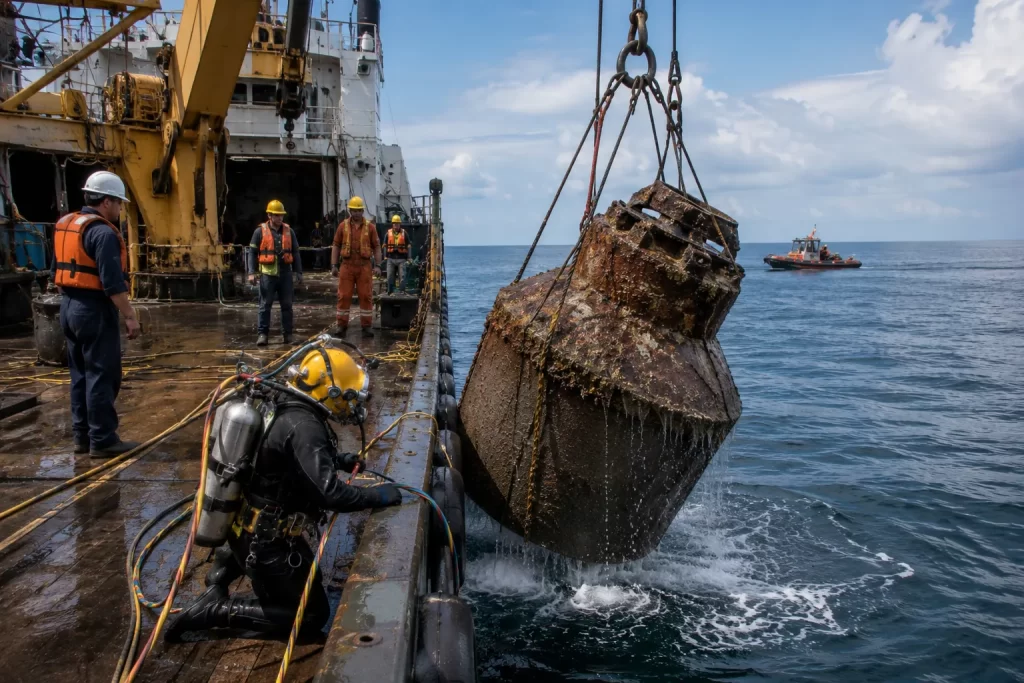
An Underwater Salvage Operation is a specialized marine service that recovers vessels, cargo, equipment, and debris from underwater environments. These operations play a critical role in maintaining safe waterways, protecting marine ecosystems, and restoring valuable assets. According to the International Maritime Organization, thousands of maritime incidents occur globally each year, creating demand for professional salvage teams equipped to handle complex underwater recoveries.
Modern underwater salvage projects combine advanced diving techniques, remotely operated vehicles, heavy lifting systems, and detailed engineering assessments. Whether recovering a sunken vessel from a harbor or removing debris from offshore infrastructure, every operation requires careful planning and strict safety procedures. Environmental protection has also become a major focus, particularly when fuel leaks or hazardous materials are involved.
We have seen significant advancements in salvage technology during the last decade. High-definition underwater imaging, sonar mapping, and robotic inspection systems have improved accuracy while reducing risks to divers. These innovations help teams complete projects faster and more safely.
Understanding the process, equipment, and safety measures involved in an Underwater Salvage Operation helps marine operators, port authorities, and infrastructure owners make informed decisions when underwater recovery becomes necessary.
Understanding the Underwater Salvage Process
Assessment, Planning, and Recovery Stages
Every successful salvage project begins with a comprehensive site assessment. Teams first evaluate water depth, visibility, currents, weather conditions, and the condition of the submerged object. Divers and sonar systems gather data that engineers use to develop a recovery strategy.
The planning phase identifies potential hazards and determines the required equipment. Structural integrity assessments help establish safe lifting points. Environmental surveys also identify possible contamination risks. Once planning is complete, recovery operations begin using specialized lifting systems and underwater support equipment.
A standard salvage process typically includes:
- Site inspection and survey.
- Risk assessment and safety planning.
- Structural evaluation of the object.
- Equipment mobilization.
- Lifting and recovery operations.
- Transportation and disposal or restoration.
Professional teams document every stage to maintain compliance with maritime regulations and safety standards. This structured approach improves efficiency and minimizes operational risks. Explore our solutions for Underwater Noise Pollution and Its Engineering Solutions.
Essential Equipment Used in Underwater Salvage Operations
Modern Tools for Complex Recoveries
Equipment selection depends on project size, depth, and environmental conditions. Advanced technology has transformed how salvage teams conduct underwater recoveries, allowing more precise operations in challenging environments.
| Equipment | Primary Purpose | Typical Depth Range |
|---|---|---|
| Remotely Operated Vehicles (ROVs) | Inspection and monitoring | Up to 6,000 meters |
| Side-Scan Sonar | Object detection and mapping | Up to 1,000 meters |
| Lift Bags | Buoyancy-assisted lifting | Up to 100 meters |
| Hydraulic Cutting Tools | Structure removal | Variable |
| Crane Barges | Heavy lifting operations | Surface support |
| Diving Systems | Direct underwater intervention | Up to 300 meters |
ROVs provide real-time video and data transmission, reducing diver exposure in hazardous conditions. Side-scan sonar creates detailed images of the seabed, helping teams locate submerged assets quickly. Lift bags generate buoyancy forces that assist in raising objects without causing additional structural damage.
Heavy-duty cranes mounted on barges often handle final recovery stages. Combined with hydraulic cutting tools and underwater welding systems, these assets allow salvage specialists to complete highly technical operations with greater precision.
Safety Measures During Underwater Salvage Operations
Protecting Divers, Equipment, and the Environment
Safety remains the highest priority in every Underwater Salvage Operation. Divers work in environments where visibility may drop below three feet, currents can shift unexpectedly, and structural instability creates additional hazards.
Professional salvage organizations follow strict safety protocols that include:
- Pre-dive safety briefings.
- Continuous communication systems.
- Emergency evacuation procedures.
- Redundant life-support equipment.
- Weather monitoring programs.
- Environmental containment plans.
Divers undergo extensive training and certification before participating in salvage projects. Surface support teams monitor oxygen levels, dive times, and decompression schedules throughout operations. Emergency medical personnel are typically available during large-scale recoveries.
Environmental protection measures are equally important. Containment booms, spill response kits, and pollution-control equipment help prevent fuel or chemical releases. These safeguards reduce environmental impact while maintaining regulatory compliance.
Industry experts recommend conducting comprehensive hazard analyses before mobilization. This proactive approach identifies potential risks early and significantly improves operational safety outcomes.
Challenges and Best Practices in Salvage Operations
Managing Complex Marine Conditions
Underwater salvage projects rarely occur under ideal conditions. Strong currents, poor visibility, confined spaces, and deteriorated structures can complicate recovery efforts. Weather-related delays alone account for approximately 20% of offshore marine project interruptions worldwide.
Successful salvage teams overcome these challenges through preparation and technology. Detailed hydrographic surveys provide accurate site data before recovery begins. Engineers develop contingency plans for equipment failure, changing weather, and unexpected structural issues.
Key best practices include:
- Conduct detailed pre-project surveys.
- Utilize ROV inspections before diver entry.
- Maintain backup lifting systems.
- Implement environmental monitoring programs.
- Establish clear communication protocols.
- Review emergency response procedures regularly.
Experience shows that projects with extensive planning experience fewer delays and safety incidents. Combining advanced equipment with skilled personnel creates the strongest foundation for successful recovery operations.
Conclusion
An Underwater Salvage Operation involves far more than simply lifting a submerged object. It requires detailed planning, specialized equipment, skilled professionals, and rigorous safety procedures. Modern technologies such as ROVs, sonar mapping systems, and advanced lifting equipment have significantly improved recovery capabilities while reducing operational risks.
We continue to see the marine industry adopt safer and more efficient salvage methods. From initial assessments to final recovery, every phase demands precision and expertise. Organizations that prioritize planning, safety, and environmental protection achieve better outcomes and minimize project disruptions. Understanding these processes helps stakeholders appreciate the complexity and importance of professional underwater salvage services in today’s maritime environment.